
AI transition
AI in the daily work of your team.
Training on your processes and your data, until the team governs AI on its own.
A programme in three phases (assessment, design of the intervention, delivery) with laboratories per function on the live tasks of every department.
They chose us
- Worldline
- Alba Leasing
- L'Erbolario
- 3M
Who it is for
The heads of a function, and the roles that commission the programme.
Heads of a function
- Marketing manager
- Sales manager
- Research and development
Who commissions it
- CEO and C-suite
- Marketing and sales directors
- HR and training
Every function has its own vertical, on its own processes: administration, tenders office and technical office included. In light blue: the roles that can approve and deliver the programme.
Is this your situation?
- the company is organised in departments, has 50 or more employees and an IT function (internal or external), and is evaluating the adoption of AI, or has already adopted it and wants to structure it and comply with the AI Act;
- AI is forbidden on paper and used in practice, and the company is exposed exactly where it believes it is protected;
- the AI policy waits for someone who knows the instrument, and the training waits for the policy;
- the AI Act (the European regulation on artificial intelligence) requires demonstrable AI literacy from the people who use AI, and you want to fulfil it with a programme that also improves the work;
- every department has two or three repetitive activities that consume qualified time, and you want to recover that time;
- the supplier proposes agents and automations, and you want the company to write the specification.
What it is for
The programme integrates AI into the work processes, on company data, until the team governs it on its own. It is training that goes beyond classroom lectures: most sessions are laboratories on the daily tasks of the participants, agreed with the company before the classroom. The time of the programme produces real work.
AI executes. People supervise the result and apply their judgement: this is what we mean by «AI that works with you». The instrument is the one you already use.
It is the first stage of the AI roadmap: here the team acquires the knowledge and applies it to its processes. The next stage is Company AI Culture, the periodic review that keeps that knowledge up to date.
Explore the topic: Revenue and AI governance →
The results at the end, role by role
- More ideas, less routineMarketingbrainstorming with AI and optimised execution times on routine activities: adaptations, briefs (the instructions for a piece of content) and micro-copy (the short texts of ads, buttons and product sheets)
- Faster proposalsSalesoptimised times to prepare B2B proposals and answer RFQs (the requests for quotation from clients), with standard methods shared by the team and full personalisation preserved
- Deeper analysisR&D and technical officefaster, deeper document analysis, with office agents that extract data from patents, data sheets and regulations and free the time of technical staff
- AI Act complianceHR and C-Suitewith a validated perimeter of use: information assets protected, Shadow AI (the use of unauthorised tools) eliminated, productivity safeguarded
- Your functionYou choose the department to start from and its processes: the vertical is built from there.Describe your department
A hybrid programme of consulting and training: the training components, and the consulting components when compatible with the inter-professional fund the company has joined (Italian Fondi Interprofessionali, which finance employee training), can be included in financed training plans.
Download the programmeFree PDF. Confirm your email and you get it straight away, in your inbox too. Fill this in and I will send it
What you obtain
Tell us your priorities and the objectives you have to reach.
We indicate where your department can recover value, and where to start.
Fields of application
For the heads of a function
Two or three processes of the department, redesigned with AI.
For the heads of marketing, sales, human resources, administration, tenders or the technical office, the vertical works on the processes of the department and on real data, until AI executes them and people supervise them. People finish with their own work redesigned, with a specification the company hands to the IT function or the supplier, and with the next process chosen by them.
For top management
Perimeter of use, rules and AI Act literacy.
For the CEO, the C-suite and the HR direction, the programme delivers the deliberate perimeter of use, rules known to all with traceable use, and the AI literacy the AI Act requires, inside the plenary session. The training components can be included in a financed training plan.
The first exchange is free of charge
Share the objectives you want to reach.
Use it to define where to start. The decision remains yours.
The method
AI Performance Systems Design, three phases, with the same structure every time and different topics, areas and content, because they follow the priorities and the processes of each business unit.
Assessment
Together with the people involved and their internal teams, we identify the objectives and the priorities, starting from the data and from the people (internal stakeholders).
Design of the intervention
On the data collected in the assessment, we design the programme as a tailored suit, built on the specific needs of the company and of the business units involved. With the leadership we plan in detail the laboratory exercises on the live tasks of every business unit.
Delivery
The programme takes place in person, remotely or in hybrid form, according to the specific needs of the company. It uses proprietary methods and frameworks and a learning-by-doing approach (learning through practice) that keeps production running during the learning.
Within one working day
Describe your priorities and the objectives you want to reach.
You receive a targeted answer on your case.
Your gain
What you obtain
What remains in your department when the programme ends, measured by you.
- The deliberate perimeter of useWhat is allowed, written after testing: the basis of the policy, with the AI literacy the AI Act requires.
- Rules known to allWho uses AI and how, with traceable use in place of individual initiative.
- Two or three processes per functionWhere AI executes and the person supervises, already in use, with working prompts.
- The specification for the supplierAt least one per function: the company states what it wants, instead of evaluating what it receives.
Who answers
Tell us the result you have to deliver.
Enrico Giubertoni, personally, from the first message.
Where you arrive
When every department has redesigned its processes with AI and has chosen the next one on its own: the posture moves from waiting to governing. Rules, processes and specifications stay yours. The next stage on the roadmap is Company AI Culture: the periodic review that keeps the knowledge acquired here up to date, starting from the map and the rules built in the Transition.
Frequently asked questions
Which instrument do you use?
The one you already use: Copilot, ChatGPT or Gemini. If you still have to choose one, you choose it, with a criterion written in the map.
Is our data safe?
The deliberate perimeter of use starts from exactly this question: it establishes which data can enter an instrument and which data stays outside. How it is built on your data is the first topic we discuss together.
Are the sessions in person or remote?
They can be in person, remote or hybrid, according to the organisation of the company.
How long does it last, and for how many people?
Duration, programmes and number of participants are designed on the needs identified in the pre-assessment: for this reason every programme is fully tailored.
What is the impact on productivity?
The laboratories work on real, concrete cases of your company: the training hours stay productive, because the work is on the real production needs of the company. Training and productivity proceed together.
Does it cover the AI Act training obligation?
Yes: the AI literacy the regulation requires is part of the plenary session and of the perimeter of use.
Can it be financed?
Yes. It is a hybrid programme of consulting and training: the training components, and the consulting components when compatible with the inter-professional fund the company has joined, can be included in financed training plans.
What about people who fear replacement?
We state it on the first day: AI executes, the person supervises. Whoever supervises is promoted.
Who will work with us?
Enrico Giubertoni, personally, from the assessment to the delivery.
Start here
Tell us the function to start from and how you use AI today. We answer within one working day with a proposed map.
Your advisor
Enrico Giubertoni
Founder and Performance Systems Architect™
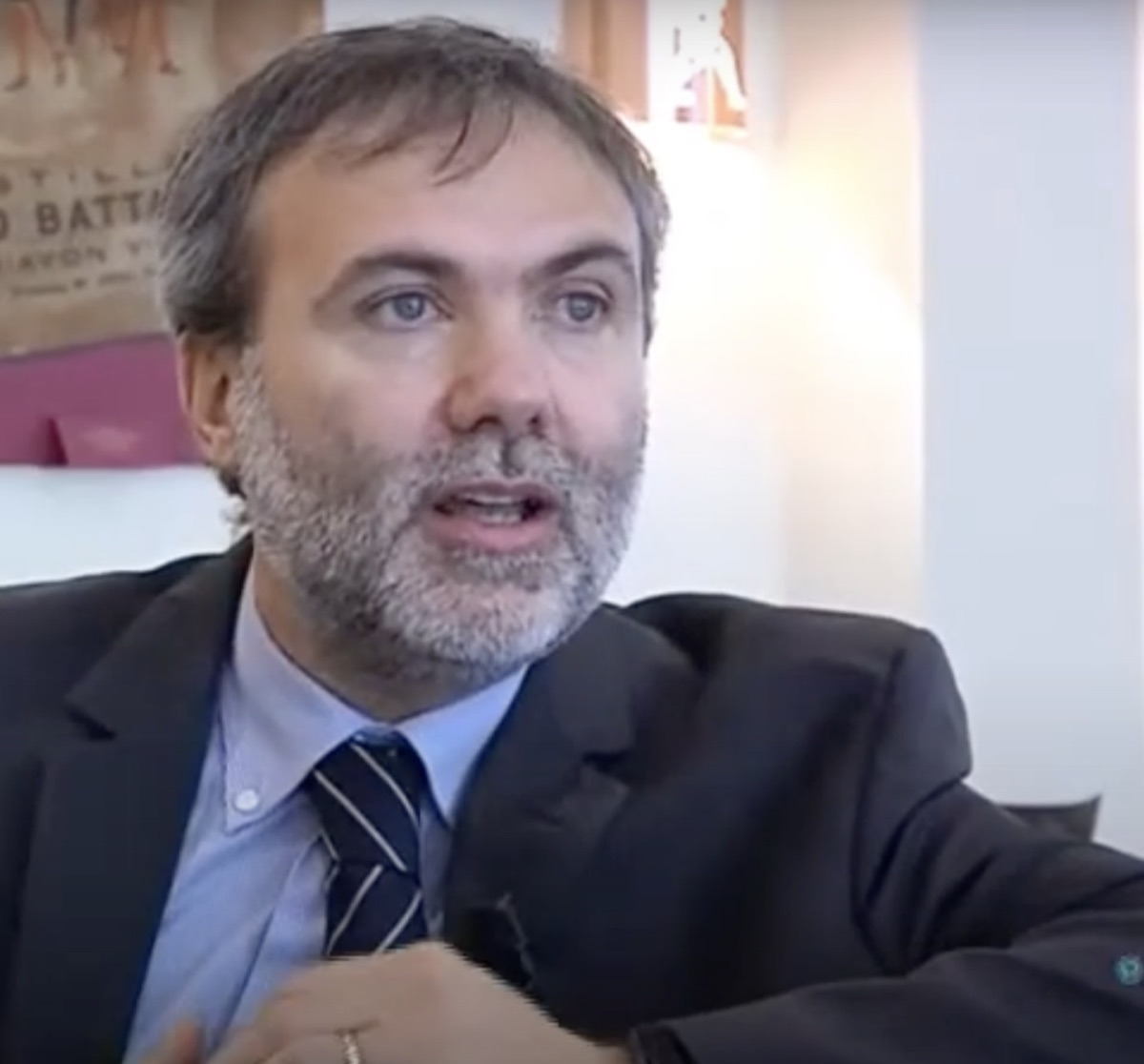
Enrico Giubertoni personally manages this programme and accompanies you from start to finish.
Enrico Giubertoni is a revenue systems designer, management consultant and keynote speaker. He is the author of five publications on digital marketing and more than 310 articles, and since 2006 he has run one of the longest-running strategy blogs in Europe.
Read more
As a Performance Systems Architect™, since 1998 he has been decoding digital signals for revenue governance and Signal Intelligence™ (reading latent buying signals) in B2B companies. His work identifies Analytical Inertia (the data a company owns but does not turn into decisions) within business units and turns it into Financial Velocity, the speed at which a company generates value.