
Strategic Upskilling Training
We build new competences in your business units and internal teams.
“Our team has a new task in front of it, and we have no idea where to start.”
They chose us
- Worldline
- Alba Leasing
- L'Erbolario
- 3M
Who it is for
Heads of department and company leadership.
Heads of department
- Marketing manager
- Sales manager
- Research and development
Company leadership
- Marketing and sales directors
- CEO and C-suite
- HR and training
In light blue: the roles that can approve and deliver the programme.
Is this your situation?
- You must open a channel, a market, a procedure or a process that nobody in the company has managed before, and there is no precedent to start from.
- The role requires management competences you do not have yet, or you cannot say which competences a specific market or business context requires.
- Top management has given you a target, and your team has no defined route to reach it.
What it is for
This is upskilling (raising the level of what the team can do): the people stay the same, and what they can complete independently grows. The training programme transforms a new task into a competence of the department: whom to involve, what to do and in which sequence, with which criteria to decide. From that moment the task leaves your agenda as a problem and becomes a route with defined stages.
Your team learns by doing, on the job, on the real cases of your company. Training therefore becomes an investment in quality, and you obtain the return during the programme, because the team produces while it learns. This is where you see the difference: the team that did not know where to start now works with its own method.
Results obtained in our case studies
- +39.2%Marketing managercontent about the brand published by the partner network, growing steadily: more organic visibility and a stronger brand reputation with no additional budget
- -66%Marketing operationsweekly hours the team spent following up partners: higher operational efficiency and no wasted materials
- +18%Sales managerhalf-yearly reorders from the trained points of sale: sell-through (the goods actually sold to the end customer) increases and customers remain loyal
- 140Research and developmentitems of feedback per month, with real data and use cases collected directly from end customers: a permanent observatory on product performance and perception
- 2 ambassadorsHR and General managementinternal people trained to lead and replicate the method independently: know-how codified inside the company, autonomy and a measurable return on training
- Your targetYou define this target: it is yours, and it is our starting point.Tell us about your opportunities
For eligible companies in Italy, this Strategic Upskilling Training can be funded through the Italian inter-professional training funds (Fondi Interprofessionali).
Download the case studyFree PDF. I also send it by email, so you can find it again when you need it. Fill this in and it is yours
What you obtain
Tell us your priorities and the objectives you have to reach.
We indicate where your department can recover value, and where to start.
Fields of application
An upskilling programme inside your department
When the team needs new procedural and operational competences, and practical training on them. At the end of the programme the department has its own method, and more confidence and familiarity with its tasks.
Cross-departmental upskilling programmes
When the company has started an innovation process and every department must follow the same guidelines. The programmes involve several departments at the same time and in a coherent way. The result is a common way of operating, with shared KPIs, a shared method and shared results.
The first exchange is free of charge
Share the objectives you want to reach.
Use it to define where to start. The decision remains yours.
The method
Learning by doing, training becomes an investment in quality: you obtain the return during the programme, because the team produces while it learns.
Assessment
Together with the people involved and their internal teams, we identify the targets and the priorities, starting from the data and from the internal stakeholders.
Programme design
On the data collected in the assessment, we design the programme to measure, for the specific needs of the company and of each business unit involved. With the leadership we plan in detail the practical workshops on the live tasks of every business unit.
Delivery
The programme runs on site, remotely or in hybrid form, according to the needs of the company. It uses proprietary methods and frameworks and a learning-by-doing approach, which guarantees continuity of production during the training.
Within one working day
Describe your priorities and the objectives you want to reach.
You receive a targeted answer on your case.
Your gain
What you obtain
What remains in your department when the programme ends, measured by you.
- New competences in the departmentProcedural and operational, acquired on real cases: the team uses them from the next day, and keeps them.
- Consolidated qualityThe work done during the programme is real output: quality rises while the team learns, and stays at the new level.
- A method for each departmentWho does what, in which sequence, with which criteria. Written for the team, so that new colleagues can also read it.
- Shared KPIsThe indicators the department uses to measure progress, selected from those you already measure. You present them to top management with confidence.
Who answers
Tell us the result you have to deliver.
Enrico Giubertoni, personally, from the first message.
Where you arrive
Your team has acquired new competences through real work, and uses them independently. The department has a written, shared method, and KPIs that show you and top management how much has changed. The quality of the work has increased during the programme, and remains at that level. The task that nobody knew how to approach is now a competence of your team, and the team will manage the next new task with its own method.
Frequently asked questions
How long is a programme, and for how many participants?
Duration, content and number of participants depend on the needs identified in the pre-assessment: for this reason every programme is fully tailored. We define the scope together in the offer, and it remains fixed.
What is the impact of the training on the productivity of the departments?
A positive impact: the programme runs on the job, on the real cases of your company. The team produces while it learns, and continuity of production is guaranteed.
Is it classroom training?
It is training on the job, with practical workshops designed for your company. The workshops work on real, concrete cases: the training hours stay productive, because the team works on the actual production needs of the company. Training and productivity stay connected. When a classroom is necessary, the classroom is your department.
Who in the team should take part?
The people who will use the competences afterwards. Normally the head of the department and the team members responsible for the new tasks.
Is it possible for several departments together?
Yes. This is the cross-departmental programme: several departments follow the same guidelines, at the same time and in a coherent way.
Is funding available?
Yes, as training. We discuss it in the pre-assessment, so that the offer considers the funds your company has access to.
Who is my point of contact?
Enrico Giubertoni, personally, from the first day to the last. He shows you the risks and the opportunities of every option, and gives you the instruments to take better decisions.
Start here
Tell us your priorities and the targets you must reach: you receive a free, specific answer within one working day.
Your advisor
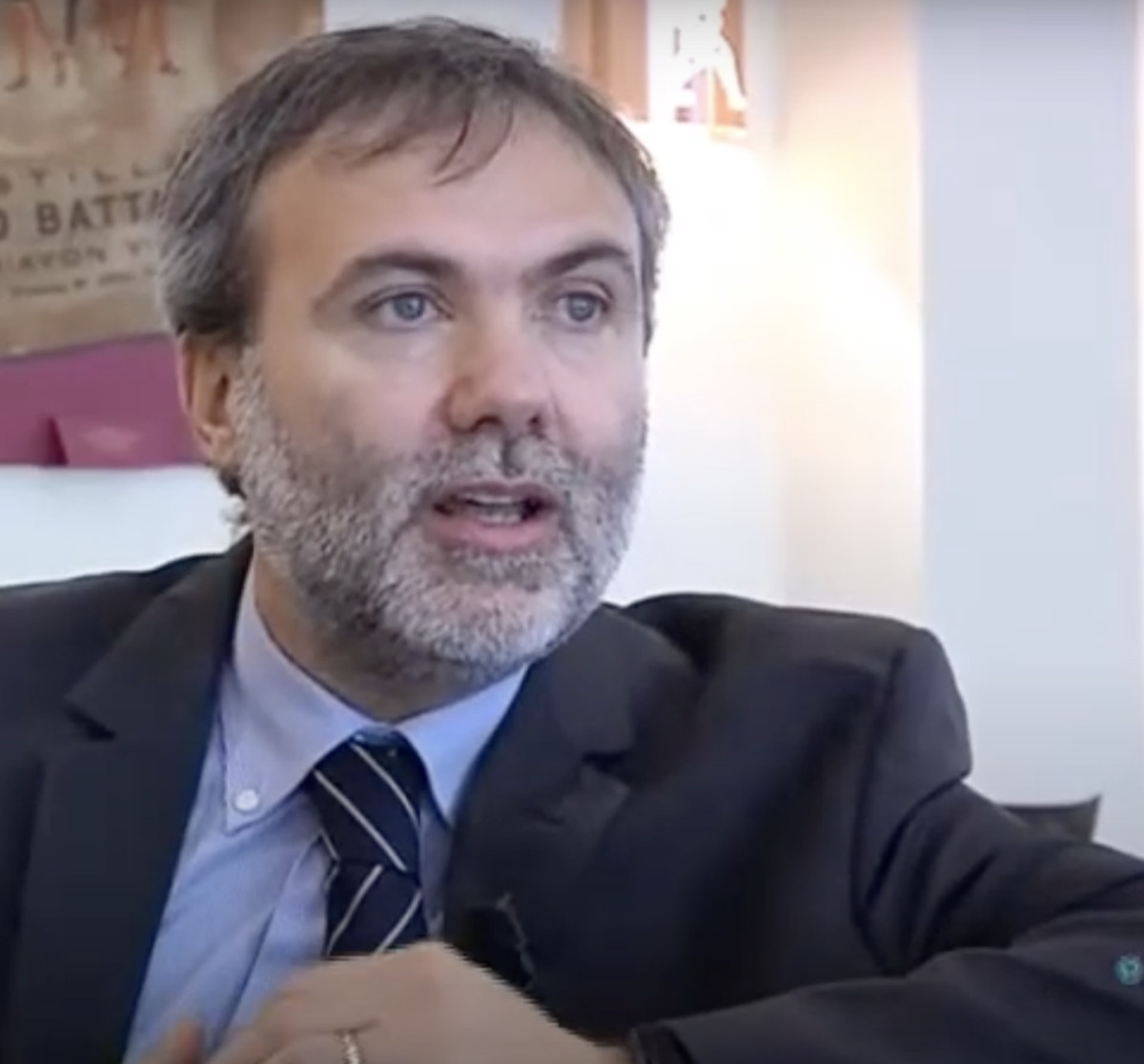
Enrico Giubertoni
Founder and Performance Systems Architect™
Enrico Giubertoni personally manages this programme and accompanies you from start to finish. He has designed revenue systems for more than thirty years: with the Revenue Blueprint™ he integrates artificial intelligence and commercial processes, and with Signal Intelligence™ he gives management the indicators to design the market. He founded one of the longest-running strategy blogs in Europe, with uninterrupted analysis since 2006, and he works with boards and executive teams that seek a systemic impact.