Books on retail:two readings to understand where commerce is going
By Enrico Giubertoni
Trusted by
Worldline
Alba Leasing
L'Erbolario
3M
Two books on retail have offered me, from complementary angles, a clear reading of the forces that are reshaping commerce: Redefining Retail by Philip Kotler and Giuseppe Stigliano, and The End of Online Shopping by Wijnand Jongen. This article is for CEOs, sales managers and training managers who want to know what each book offers and on which points the two agree.
Which books on retail should a manager read?
Read these two, because each answers a different question: Redefining Retail gives the strategic frame and The End of Online Shopping the new places of commerce. Together they cover what to decide and where customers will be.
The two books on retail compared
Book
Authors
What it offers
Redefining Retail
Philip Kotler, Giuseppe Stigliano
The strategic frame and the marketing foundations of the change
The End of Online Shopping
Wijnand Jongen
The challenge to rethink the paradigms (the models of thinking we take for granted) of interaction and the places of commerce
Source: analysis by Enrico Giubertoni
Read together, these books on retail work as magnifying lenses on the dynamics that define the commerce of tomorrow.
The customer experience revolution in new retail
A central theme of these readings is the centrality of the customer experience (everything the customer perceives and feels in contact with the retailer). It is the centre around which the entire retail strategy rotates.
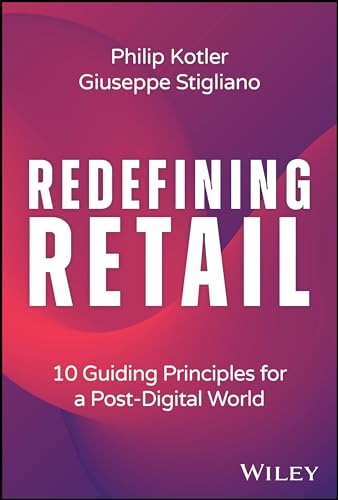
Redefining Retail, by Philip Kotler and Giuseppe Stigliano (Wiley, 2024)
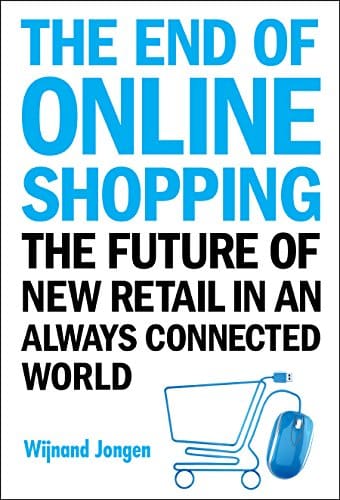
Wijnand Jongen, in The End of Online Shopping, shows how this centrality becomes the expectation of a fluid and omnipresent purchase, which he calls “everywhere commerce” (buying wherever the customer happens to be). The modern customer no longer separates online and offline channels, and expects a coherent, integrated purchase journey without friction, shaped on the needs of the moment.
Philip Kotler, in Redefining Retail, underlines that the change under way is radical. Technology has given the consumer an unprecedented power, and the consumer now looks for memorable, personalised purchase experiences that carry meaning. The revolution is first of all a change of mentality that puts the customer and the customer experience at the top of the priorities.
Phygital convergence: when online and offline become one
Jongen’s provocative thesis on the end of online shopping as an isolated concept is a strong stimulus for strategic reflection. The future of commerce is a deep and synergic fusion of the physical and the digital world, the phygital (physical and digital together, in one experience).
The End of Online Shopping, by Wijnand Jongen
The everywhere commerce approach described by Jongen shows the multiplication of touchpoints (the moments in which customer and company meet) and the growing expectation of a continuous experience, wherever the purchase journey begins, continues or ends.
The omnichannel strategies (selling through several channels as if they were one) that Philip Kotler has analysed and promoted for years as a necessary evolution of marketing find here their most complete application. Being present on several sales channels is the starting point. The work is to orchestrate them in one integrated ecosystem.
Data and intelligent technologies as engines of future retail
Any discussion on retail transformation has to consider the decisive role of data and intelligent technologies. As these readings show, technology is a powerful enabler, a means to reach strategic ends.
The modern technological toolkit is the first point. Kotler shows that artificial intelligence, Big Data (very large volumes of data analysed by software), advanced automation and IoT allow companies to personalise the offer at scale, optimise operations with high efficiency and, more and more, anticipate the needs and desires of consumers.
The infrastructure behind everywhere commerce is the second. The infrastructure needed to sustain an “always connected” customer, as Jongen describes, is complex. Its implementation follows the primary objective of a superior customer experience, intuitive and without friction, where technology works behind the scenes.
What these two books on retail teach: converging visions
Reading these two books on retail gives a rich overall view. Despite distinct focus and analytical approaches, the books converge on some themes that will define success in the commerce of the future:
Tomorrow’s retail is hyper-personalised and driven by experience. The ability to offer each customer what the customer needs, at the right moment and in the right way, becomes more and more decisive.
The full integration of physical and digital is a necessity. In the perception of the consumer the borders between channels disappear, and companies need a unified vision and management of the customer journey (the path a customer follows from first contact to purchase and after).
For a manager who has to choose where to begin, the practical path is short. Take Redefining Retail to align the leadership team on the strategic frame, then The End of Online Shopping to test every channel decision against the customer who moves freely between them.
Frequently asked questions
Does the end of online shopping mean the end of e-commerce?
Jongen’s thesis announces the fusion of e-commerce with the physical store into one purchase journey. The customer no longer separates the two worlds and expects one coherent, integrated experience without friction, wherever the purchase begins and ends.
Is technology the goal of retail transformation?
Technology is a powerful enabler, a means to reach strategic ends. Artificial intelligence, Big Data, automation and IoT make it possible to personalise the offer at scale, optimise operations and anticipate the needs of consumers. Their implementation follows the objective of a superior customer experience, with technology working behind the scenes.
On which themes do the two books on retail converge?
They converge on three themes: tomorrow’s retail is hyper-personalised and driven by experience, the full integration of physical and digital is a necessity, and artificial intelligence and predictive data analysis become pervasive. It follows that companies must govern the customer journey in a unified way.
In which order should a manager read the two books?
Start with Redefining Retail for the strategic frame and the marketing foundations. Continue with The End of Online Shopping, which challenges the paradigms of interaction and the places of commerce and tests every channel decision against the customer who moves freely between them.
Which book fits a sales team or a training programme?
Jongen’s book suits a sales team: it describes the customer who moves freely between channels, which is the situation every salesperson meets. Redefining Retail suits a training programme for managers, because its principles can be discussed one by one in a workshop.