
From customer to value
Sustainable marketing: answers to the questions managers ask most
Trusted by
- Worldline
- Alba Leasing
- L'Erbolario
- 3M
Sustainable marketing is the promotion of products and services that truly meet criteria of environmental sustainability. It covers the product, the production process and the communication together, and it holds only when the three tell the same story.
This article collects the questions that managers ask me most often on the subject, in my work of advisory for managers and decision makers and of training for internal teams. The answers have a practical aim: to give marketing and sales the means to communicate real green policies and, at the same time, to reinforce revenue and growth targets.
Why do more and more companies adopt sustainable marketing and communication?
Companies adopt an approach of environmental responsibility less because of regulatory obligations or incentives than because they recognise two facts:
- The target expects a commitment. The consumer and the business buyer expect a social commitment towards the environment.
- Environmental performance is a competitive variable. It has become a key company variable to maintain and develop competitive position and reputation.
For this reason sustainability is an ethical, strategic lever to reach the target and to build memorable experiences along its customer journey (the path a person follows from the first contact with a brand to the purchase and beyond).
What sustainable marketing includes and why a company should practise it
Sustainable marketing includes a wide range of activities: the change of the product or of the production process, the use of eco-sustainable packaging, and promotional communication.
The whole digital marketing ecosystem of a company must integrate the levers of marketing and communication of sustainability. The reason follows from the previous answer: if the target expects a commitment, a company without one drops out of its choice.
The levers of sustainability can also concern ethical projects outside the environment in a strict sense. A campaign on road safety, for example, touches aspects of social sustainability.
Why do B2B and B2C targets feel the need for sustainability?
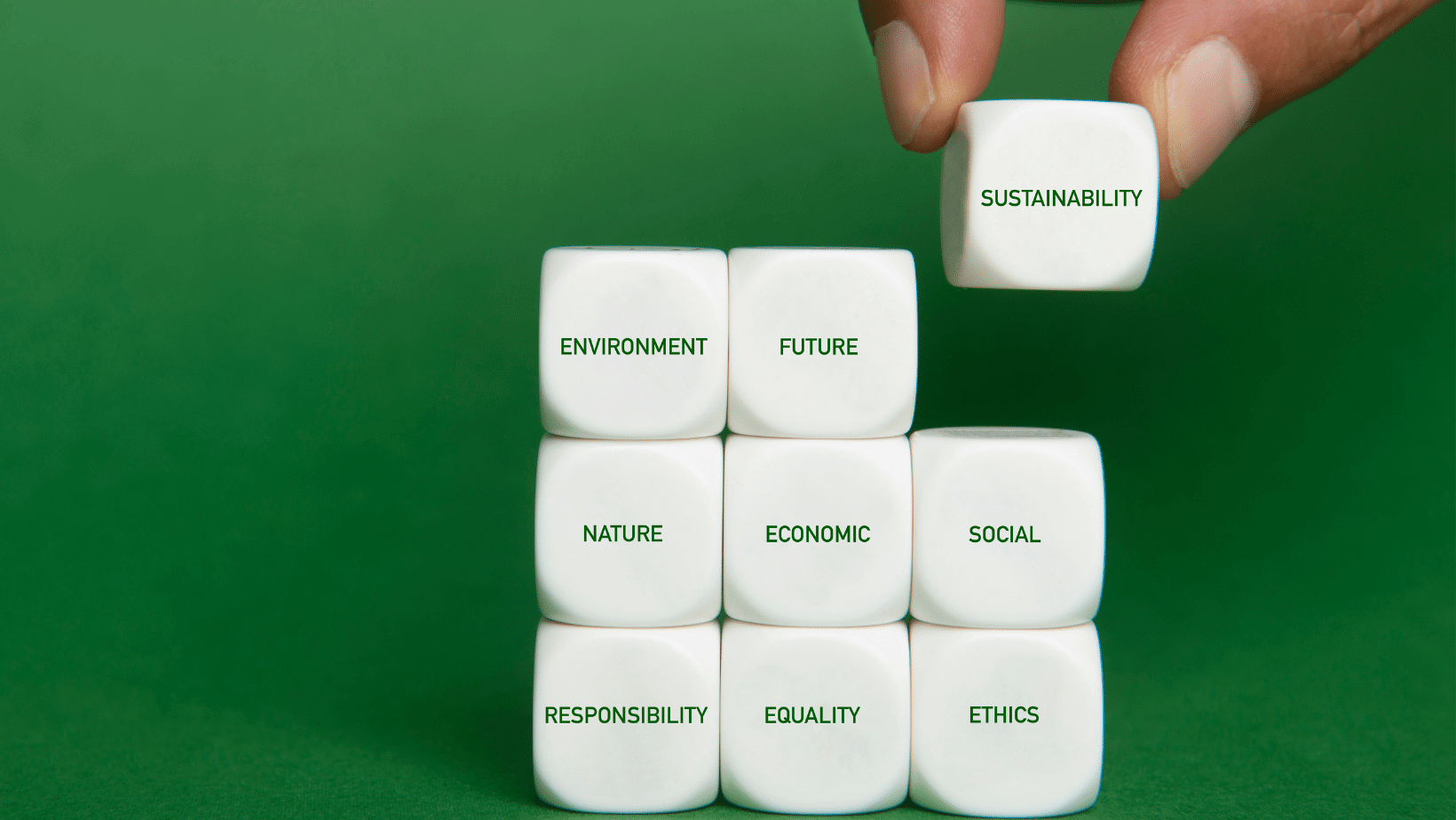
Environmental sustainability is a need for the target, in B2B (sales between companies) as in B2C (sales to the final consumer), because every person perceives the impact of climate change in private life.
For this reason the target builds its own action plan, often shared inside an online community (a group of people who exchange views on a shared interest through digital channels):
- It chooses the brands that practise sustainable marketing.
- It changes individual behaviour, for example by closing the tap while brushing teeth.
- It acts against unsustainable brands, from stopping purchases, which feeds customer churn (the share of customers who leave in a period), to real acts of social protest.
Which generations care most about environmental sustainability?
The generations most involved in environmental sustainability are, paradoxically, those born in the middle of climate change: the generations born from 1980 onwards, who cannot compare the climate before with the climate after.
In particular:
- Generation Y
- Generation Z
- Generation Alpha
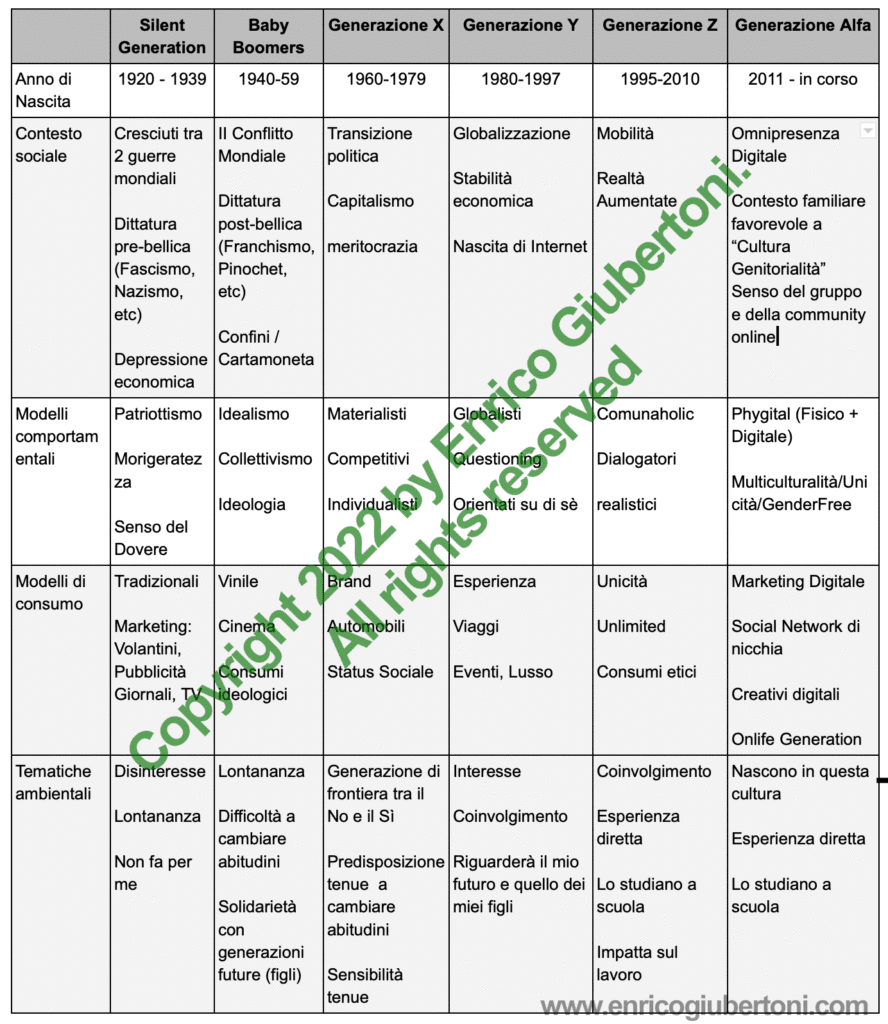
The least involved are the senior generations, born between 1920 and 1960, who on the contrary can make an effective comparison between the climate before and the climate after. On how the youngest generations choose, see digital natives buy experiences.
Why must the marketing activity of companies be green?
Because companies must satisfy a systemic need of the target: to live on a planet that is safe for human existence. This is a responsibility that a digital marketing consultant brings to every strategy.

The target needs the company to commit itself, because the target is already committing itself by transforming its own habits.
In company management, marketing must integrate a plurality of meanings, grouped in three categories:
- Respect for the environment.
- Policies with low environmental impact.
- The needs of present and future generations inside the company, society and the community where we live.
Must sustainable marketing put profit in second place?
Practising sustainability means changing production processes and adopting innovation with low or zero environmental impact. Profit is a variable independent of sustainability.
Profit and the systemic variables of the company always stay in first place, in sustainable marketing as in every form of marketing.
Enrico Giubertoni
Environmental sustainability is a decisive change of entrepreneurial approach that modifies all the processes of the company, whose purpose must be:
- Values: respect for the environment.
- Ethics: respect for people (target, external stakeholders, internal stakeholders).
- Economic prosperity.
When the change of production processes reduces margins, marketing and sales must intervene to support profit, practising sustainability marketing in an ethical and fair way. Sustainable marketing is therefore fully compatible with revenue and sustains it.
Why must brands take a position on social and political issues in the decade of sustainability?
This is perhaps the most complex question of the article, and the answer is simple.
In the era of ecosystem protection, brands must take a position on social and political issues because their target asks them to.
Enrico Giubertoni
The target is worried about the planet and perceives climate change every day: in sport (think of winter skiing, and even more of summer skiing on glaciers, or of mountain excursions) and in daily life (very hot summers, very cold winters, more hailstorms, floods and cloudbursts).
The target expects from companies a commitment and a position on green issues, inside the values and the mission of the brand. For this reason brands must approach sustainability so that green marketing coincides with a real commitment for the future, made of concrete, traceable and transparent actions, also at social level.
What greenwashing is
Greenwashing is the opposite of sustainable marketing. The word has a negative meaning and indicates an environmentalism or a sustainability of facade, which can arrive at real deception. It indicates the communication strategies that build a misleadingly positive image of a company with regard to environmental impact.

A company falls into greenwashing in two ways:
- On purpose, to distract public opinion from the negative effects on the environment of its activities or products.
- By chance, or through a hasty decision.
How do companies fall into greenwashing?
Greenwashing is an insidious stratagem. It happens when companies, large corporations or even institutions try to hide or cover actions far from green with large public gestures in favour of environmental causes.
TerraChoice (see the references at the end) identified six sins of greenwashing in 2007 and, in its 2009 report, added a seventh, false labels. Here are all seven:
- Hidden trade-off: the typical strategy of presenting one part as the whole. A product is defined as green by concentrating the communication on a single feature.
- No proof: declaring features without sufficient information or without certificates issued by neutral third-party bodies.
- Vagueness: using imprecise claims with the purpose of deceiving the good faith of the consumer.
- False labels: confusing the consumer with the impression that a third-party certificate exists, when in reality it does not.
- Irrelevance: emphasising green features that are of little or no relevance for an informed choice.
- Lesser of two evils: claiming product features that have no influence on environmental impact (for example, organic tobacco).
- Fibbing: for example, labelling products “Energy Star” without being certified.
What does EU law say about green claims?
Environmental claims made to consumers fall under Directive 2005/29/EC on unfair commercial practices, which prohibits misleading information.
Directive (EU) 2024/825 sharpens that rule for the green transition. It bans generic environmental claims such as “eco” or “environmentally friendly” when the excellent environmental performance cannot be demonstrated, claims that a product has a neutral, reduced or positive impact on emissions based on offsetting, and sustainability labels that rest on no certification scheme or are not set by public authorities. Member States had to transpose the directive into national law by 27 March 2026 and apply the new measures from 27 September 2026.
Several of the sins above, in particular vagueness and false labels, are the very practices these rules target. For a company, proof before the claim is now a legal safeguard as well as a matter of reputation.
References
- TerraChoice, PDF: The Six Sins of Greenwashing (2007)
- UL Solutions, which acquired TerraChoice: The Seven Sins of Greenwashing
- European Union: Directive 2005/29/EC and Directive (EU) 2024/825
- What the Energy Star certification is
Frequently asked questions
Why do companies adopt sustainable marketing strategies?
Less because of regulatory obligations or incentives than because they recognise two facts: the target expects a social commitment towards the environment, and environmental performance has become a key variable for competitive position and reputation. Sustainability is therefore an ethical, strategic lever to reach the target.
Must sustainable marketing put profit in second place?
Profit and the systemic variables of the company stay in first place, in sustainable marketing as in every form of marketing. When the change in production processes reduces margins, marketing and sales intervene to support profit: sustainable marketing is compatible with revenue and sustains it.
Which generations are most sensitive to environmental sustainability?
Paradoxically, those born in the middle of climate change, that is the generations born from 1980 onwards (Y, Z and Alpha), who cannot compare the climate before with the climate after. The least involved are the senior generations, who can make that comparison.
How can a company avoid greenwashing?
By checking every environmental claim against the seven sins described by TerraChoice: do not present one feature as the whole product, back each claim with information or with a certificate from a neutral third party, avoid vague words, never imply a label that does not exist and stay on features that matter for the choice. Directive (EU) 2024/825 now makes several of these practices explicitly unlawful towards consumers.
Why must brands take a position on social and political issues?
Because their target asks them to. The target perceives climate change every day, in sport and in daily life, and expects from companies a commitment on green issues inside the values and the mission of the brand. The commitment must be made of concrete, traceable and transparent actions, also at social level.
In the same area
What are your business challenges?
Tell me about your priorities and the goals you want to reach.
Enrico Giubertoni will give you targeted feedback within one business day.