Social listening:what it is and 5 reasons to use it in cosmetic product strategy
By Enrico Giubertoni
Trusted by
Worldline
Alba Leasing
L'Erbolario
3M
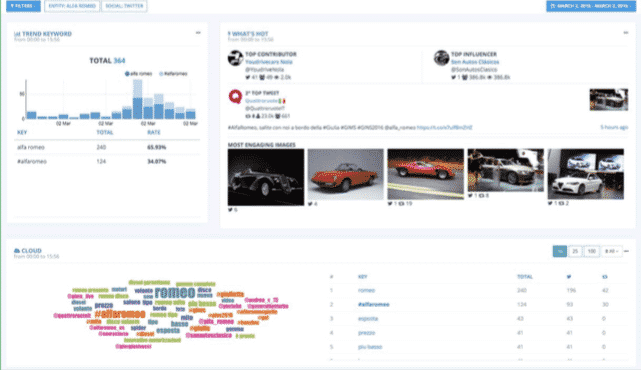
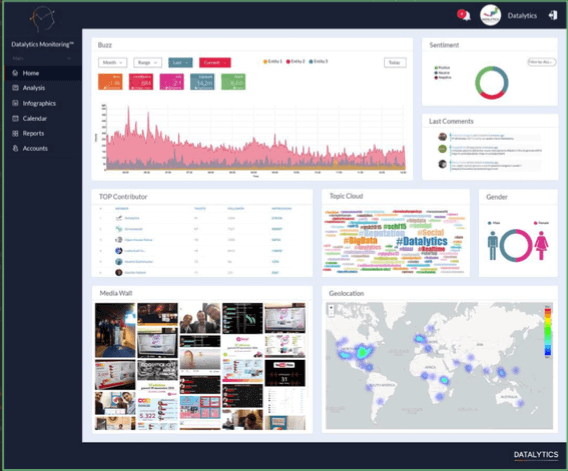
Trend keywords, top contributors and most engaging images (Datalytics)
Social listening is the analysis of public online conversations about a brand, its products, its market and its competitors, with the purpose of turning what people write into decisions. It is written for marketing directors, marketing managers and research and development (R&D) teams in cosmetics companies, and it gives a usable definition, the difference from simple monitoring and five reasons to integrate it into product strategy.
What is social listening?
Social listening is a form of social media monitoring that obtains, about your products:
the statements people make, in their own words
the moods and emotions behind those statements
a segmentation of the target (its division into groups with shared traits) on a socio-demographic basis
All of this without intruding on the privacy of individuals, because it works on public conversations.
For this reason social listening understands expressions such as “product X is excellent, fantastic, super” or “product Y is terrible, a fail”, and attributes them to the right product.
Social listening vs social media monitoring
The two terms are often used as synonyms, and the difference matters for whoever signs the budget. Social media monitoring collects mentions: it counts how often the brand appears. Social listening analyses those mentions and asks why people say what they say, and what the company must do as a consequence.
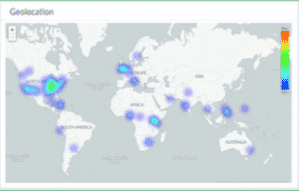
Geolocation of the conversations (Datalytics)
A social listening platform measures with precision the range of interactions that concern:
It delivers real-time analysis on three levels: corporate reputation and perception, brand reputation and perception, product reputation and perception. The term reputation here means the judgement that the public forms over time, measured on what it writes.
Market trends, competition and the demography of consumer communities are decisive for cosmetics brands, and these instruments measure all three.
5 reasons to adopt social listening
Social listening solutions based on artificial intelligence algorithms produce several advantages. I have grouped them in five points.
1. Decisions based on how consumer communities perceive the brand
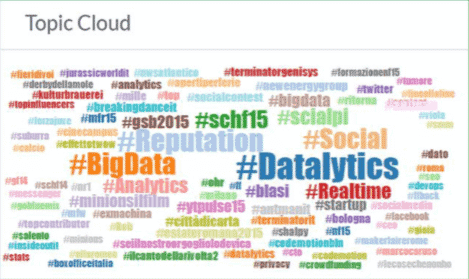
Topic cloud of the hashtags around a brand (Datalytics)
Semantic analysis (the reading of the meaning of words, not only of their count) gives a complete picture of how consumer communities and prospect communities (people who are not yet customers) perceive the brand.
It frees you from decisions based on partial assumptions, derived from common sense and from data without logical demonstration.
It therefore gives the instruments to identify which aspects of brand perception must be monitored and improved.
2. Identifying brand lovers and influencers
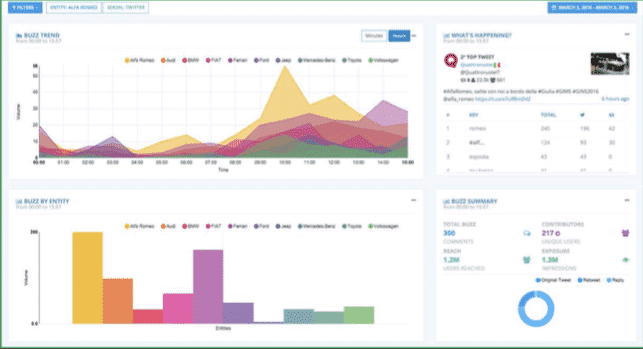
Conversation volume over time, by brand (Datalytics)
Brand lovers are the people who defend and promote the brand without being paid for it. Social listening identifies them with precision, together with the influencers who are, or could be, compatible with the brand (influencer marketing). It also measures their capacity for engagement and relationship in the target communities, so the choice of partners rests on data and not on intuition.
3. Demographic data and profiles of the communities
Social listening platforms deliver fundamental data on the demography of consumer communities and on their geographic position. With these data, decisions become precise and rest on real information and on user profiling.
Above all, they show where to locate products on the territory, a key function for single-brand chains and franchise stores.
4. A precise picture of sentiment on brands and products
Sentiment, gender and geolocation in one dashboard (Datalytics)
Social listening platforms deliver a real-time picture of sentiment, that is the positive, neutral or negative tone of conversations, on the keywords under analysis. As a consequence:
you see whether a negative sentiment emerges, and you can correct the phenomenon before it spreads
you see which components of your products people discuss
5. Identifying the topics related to your products
Social listening gives a complete picture of hashtags (words preceded by # that label a topic) and of semantic clouds (maps in which the most frequent words appear larger), and from there you understand which themes users adopt to give context to your products. You obtain more data to profile users in your advertising campaigns (social media advertising) and in social activities, and more precise data to analyse consumer needs.
Image credits: Datalytics
Frequently asked questions
What can you monitor with a social listening platform?
Conversations about your brand, your market and your competitors, their geographic area, and even the presence of your products inside photographs. The platforms add real-time analysis of corporate, brand and product reputation, indications on market trends and demographic analysis of consumer communities.
Why is social listening useful to a cosmetics company?
Because it replaces common sense with real data on market trends, competitors and the demography of consumer communities. It also shows where to place products on the territory, a key function for chains that sell only their own brand and for franchise stores (shops run by independent owners under the brand name).
How does social listening identify brand lovers and influencers?
It finds the brand lovers, the people who promote the brand spontaneously, and the influencers compatible with it, and it measures their engagement in the target communities. The choice of partners rests on data.
How does real-time sentiment analysis help a cosmetics brand?
It shows immediately whether a negative sentiment emerges about your brands and products, so you can correct the phenomenon before it spreads. Together with the analysis of hashtags and semantic clouds, it reveals the themes users associate with your products, and gives more precise data to profile advertising campaigns and analyse consumer needs.