History of e-commerce:from a 1967 film to AI buying agents
By Enrico Giubertoni
Trusted by
Worldline
Alba Leasing
L'Erbolario
3M
The history of e-commerce has surprisingly old roots, going back to futuristic visions and pioneering experiments, so much that it acquired an identity of its own inside the history of the internet.
In this guide I approach the subject from a personal viewpoint, because I lived through several of these phases of change myself.
The milestones of the history of e-commerce
Period
Event
1950s-1960s
The Philco laboratories imagine shopping through interactive screens
1969
Launch of CompuServe, the first online service provider (United States)
1979
Michael Aldrich carries out the first electronic shopping transaction (United Kingdom)
1982
The Boston Computer Exchange is founded in Boston, the first online commerce company
1980s
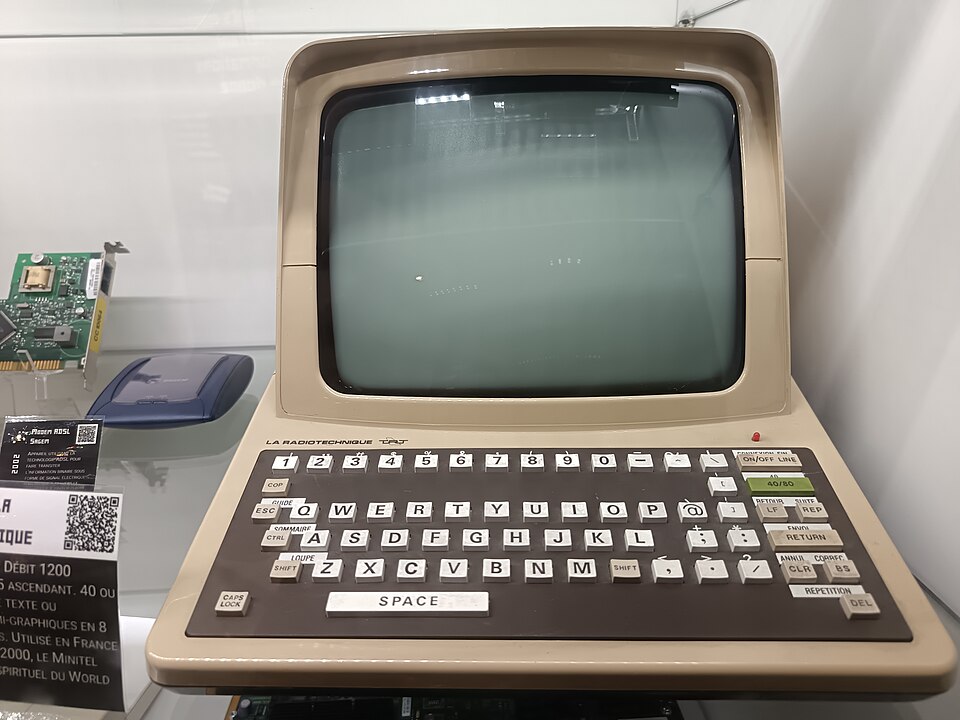
The Minitel brings online purchases to a large scale in France
1995
Amazon.com is born; Olio Carli becomes the first Italian e-commerce
1998
The first purchase on IBS.it starts online book sales in Italy
2001
Jacques-Antoine Granjon founds Vente Privée
2003
Alibaba founds Taobao
2011
Amazon.it arrives
2020
The lockdown accelerates the transition to digital
2025-2026
AI agents start to buy on behalf of the customer (Google AP2, September 2025)
Source: elaboration by Enrico Giubertoni on the dates quoted in the article
What was the first vision of e-commerce? The Philco laboratories (1950s-1960s)
Already in the 1950s and 1960s the Philco laboratories imagined a future in which shopping would take place through interactive screens. These visionary concepts of online commerce were far from what the technology of the time could build, yet they laid the foundations for the idea of commerce at a distance. The clip below is an excerpt from 1999 A.D., a promotional film produced by Philco-Ford in 1967.
How did e-commerce develop in the European Union and the EFTA countries?
“Digital identities” take different forms in different regions of the world, reflecting the cultural, political and technological features of each area. In Europe the attention is strongly focused on data protection and privacy, as the GDPR shows, and a specific project for a “European digital identity” is being developed to give citizens more control over their data.
Europe and its digital identities.
This identity develops in a context where, although alternative social platforms and search engines exist beside those dominant in the United States, there is a convergence on global platforms such as TikTok and online shopping platforms.
France and the Minitel: the cradle of social shopping (1980s-2000)
France, with its Minitel system, was one of the first countries to offer an online purchasing service on a large scale, in the 1980s. French e-commerce started in the 1980s and moved to the internet in the early 2000s. Even though the 2000s saw a migration to the internet, French citizens felt a “nostalgia effect” for their national network. It is through the internet, however, that French e-commerce begins to grow strongly.
In France the first social shopping sites and the price comparison sites such as Kelkoo are born.
Purchasing communities such as Vente Privée, founded by Jacques-Antoine Granjon in 2001, start to attract many customers and to go international.
Since 2006 Paris hosts the Ecommerce Forum, one of the first and most important e-commerce events in Europe. Personal note: I had the pleasure of attending the 2007 edition.
Italy: from the pioneers to the giants (1990s-today)
In Italy the history of e-commerce developed differently, with little link to government policies and investments, unlike in France. E-commerce therefore arrived with a slight delay compared with other European countries, and thanks to visionary entrepreneurs.
Olio Carli (around 1995): one of the first Italian companies to sell online was Olio Carli of Imperia, which had already started selling by mail order. Olio Carli became the first e-commerce in Italy in 1995.
IBS.it (1998): the purchase made on IBS.it in 1998 marked the official start of online book sales in Italy. From then the market grew quickly, with the online shop emerging both as a pure player and next to physical shops.
Until 2011 many Italians bought online mainly on platforms such as Amazon UK and Amazon France, and on eBay, perceived more as a consumer-to-consumer marketplace than as a business-to-consumer one. Personal note: I used to make about one purchase a month on Amazon UK or Amazon France.
Amazon.it (2011): the arrival of Amazon Italy gave a further push to Italian online shopping.
Italian e-commerce kept growing exponentially, especially in the 2010s when the internet reached more Italian homes, and then exploded during the 2020 pandemic lockdown.
United Kingdom: the pioneers of electronic purchasing (1970s-1980s)
Michael Aldrich (1979): in the United Kingdom Michael Aldrich carried out the first electronic shopping transaction, connecting a modified television to a computer through a telephone line. This B2B system, marketed from 1980, opened the way to commerce at a distance and to online selling. In practice the United Kingdom started the history of European e-commerce.
Which European e-commerce platforms matter?
Zalando (Germany): one of the main European platforms for online fashion, with a wide selection of clothing, footwear and accessories for men, women and children.
ASOS (United Kingdom): a British online fashion retailer known for its wide range of clothing, accessories and beauty products, aimed mainly at a young audience.
OTTO (Germany): a large German mail order and online group, with a wide range of products including fashion, furniture, appliances and technology.
Allegro (Poland): one of the most important players in Eastern Europe, the main online marketplace in Poland and one of the largest in the region, where sellers and buyers exchange a wide range of goods.
Bol.com (Netherlands): a rare case of a platform that competes almost on equal terms with Amazon. It is one of the main e-commerce platforms in the Netherlands and Belgium, with books, electronics, toys and home articles.
Cdiscount (France): the French e-commerce platform for electronics and hi-fi, with electronics, appliances, home articles and clothing, often at competitive prices.
Which European brands have a strong e-commerce presence?
LVMH (France): a French multinational luxury conglomerate with prestigious brands such as Louis Vuitton, Dior and Givenchy, sold through dedicated and multi-brand online platforms.
Kering (France): a French multinational luxury group with world-famous brands such as Gucci, Saint Laurent, Bottega Veneta and Balenciaga, which have a strong presence online with their digital boutiques.
Inditex (Spain): a Spanish multinational clothing group, the European forerunner of fast fashion, known for brands such as Zara, Pull & Bear, Bershka and Stradivarius, sold through a well developed e-commerce network covering the whole of Europe.
IKEA (Sweden): the Swedish multinational that designs and sells ready-to-assemble furniture, appliances and home accessories. It was the first in its sector to open a strong online presence with delivery and assembly services.
Philips (Netherlands): a Dutch technology multinational with lighting, personal care devices and medical equipment, sold through its own website and other online channels.
Nestlé (Switzerland): a Swiss food and beverage multinational with infant food, coffee, chocolate and pet products, sold through online retailers and, in some cases, its own e-commerce platforms.
How did e-commerce develop in Asia?
Asia and its own road to e-commerce.
E-commerce in Asia is a landscape as wide as it is dynamic, with fast evolution and strong diversification. Unlike Western markets, Asia has seen a unique digital ecosystem emerge, shaped by the fast adoption of mobile technologies, the growth of an emerging middle class and the presence of dominant local platforms.
The market is a mosaic: from China, with giants such as Alibaba and JD.com, to South-East Asia, where platforms such as Shopee and Lazada took a leading position. A distinctive trait is the strong integration with social media, in which social commerce and live streaming play an increasingly central role.
The diversity of consumer preferences and logistics infrastructure also led to solutions and business models built around local needs. Asia is a laboratory of innovation for global e-commerce, a market in constant transformation that is redefining the rules of digital commerce.
China
Taobao: founded in 2003 by Alibaba, one of the largest e-commerce platforms in the world, with an enormous variety of products.
Tmall: founded in 2008 by Alibaba as a spin-off of Taobao, focused on branded and high-quality products.
JD.com: founded in 1998 by Liu Qiangdong, known for efficient logistics and for the sale of electronics.
Pinduoduo: founded in 2015, focused on social commerce and group purchases with very competitive prices.
Douyin: the Chinese version of TikTok, which integrated e-commerce deeply with live video and short videos.
South-East Asia
Shopee: founded in 2015 by Sea Ltd. (based in Singapore), a leading platform in South-East Asia with a strong presence in mobile.
Lazada: founded in 2012 in Singapore and later acquired by Alibaba, operating in several South-East Asian countries.
Tokopedia: founded in 2009 in Indonesia, one of the largest e-commerce platforms in Indonesia.
Which Asian platforms operate in Europe?
Alibaba Group (AliExpress and Tmall): AliExpress is popular in Europe for its wide range of products at competitive prices, often coming directly from Chinese sellers. Tmall Global sells international branded products and offers Asian brands a channel to reach European consumers.
Rakuten: the Japanese e-commerce giant is present in several European countries, with a footprint that varies. It is diversified and offers other digital services besides e-commerce.
Shopee: more concentrated in South-East Asia, it has progressively started to expand and to become known in Europe too.
TikTok Shop: the social network born in China integrated product sales into its platform with great effect. Thanks to live streaming and short videos, sales grew strongly in Europe as well.
Temu: owned by PDD Holdings (the company behind Pinduoduo), Temu quickly gained popularity in Europe with extremely competitive prices. With Shein it is the face of ultra fast fashion: a very large number of items, small batches and an assortment decided by online sales data.
Which European platforms and brands operate in Asia?
The presence of European e-commerce platforms and brands in Asia is complex, because the Asian market is extremely varied and competitive. In recent years European companies established a significant presence in some areas.
European luxury brands:
LVMH and Kering: these French luxury giants have a strong presence in Asia, in particular in China, Japan and South Korea. Brands such as Louis Vuitton, Gucci and Dior are in great demand among wealthy Asian consumers. They invested in dedicated e-commerce platforms and in partnerships with local platforms to reach consumers online.
Other luxury brands: Chanel, Hermès and Prada have an online presence in Asia, often through digital boutiques on their own websites.
What to consider:
The Asian market is dominated by local e-commerce platforms such as Alibaba (Taobao, Tmall) and JD.com, which have a deep knowledge of local consumers.
European companies that succeed in Asia often adopt localisation strategies, adapting websites, payment methods and marketing campaigns to local preferences.
Partnerships with local e-commerce platforms and local influencers are often decisive to reach Asian consumers.
The strong presence of “Made in Italy” and “Made in France” products helps high fashion and high-quality brands to trade in the Asian market.
General European platforms struggle to compete with the Asian giants, while European luxury brands found a profitable market in Asia thanks to their reputation for quality and prestige.
How did e-commerce start in the United States?
The United States gave birth to the history of e-commerce, with a network that anticipated the internet, called CompuServe. The launch of CompuServe (1969), the first online service provider, was a fundamental step towards digital connection and towards the first e-commerce platforms of the 1980s. Among them:
Boston Computer Exchange (1982): founded by Alex Randall in Boston, it is considered the first online commerce company in the world. It allowed the trade of used computers.
Amazon (1995): the birth of Amazon.com in 1995 was a decisive turning point. Jeff Bezos, from his garage in Seattle, created what would become the largest online bookshop in the world. Personal note: I remember clearly making my first purchase on Amazon USA in 1995. I bought a book that reached me by airmail, a revolutionary experience for that time. Afterwards Amazon changed its logic, extending beyond books and becoming a marketplace that lets shops host spaces on Amazon.
What did the global explosion change?
Today, with billions of people connected to the internet, e-commerce is a global phenomenon. The 2020 lockdown was a turning point: it accelerated the transition to digital and transformed the way consumers and companies interact. The future of e-commerce is rich in innovation, from artificial intelligence to augmented reality, which will continue to shape the online purchasing experience.
From the 1967 film to AI buying agents: sixty years of imagined purchases
Agentic commerce (commerce with AI agents) is a purchase in which an AI agent, a piece of software able to pursue a goal on its own, searches, compares and orders in place of the person or company that gave it the mandate. It is the latest stage of an idea sixty years old: buying without leaving the armchair.
The Philco-Ford film you saw above dates from 1967 and told the first version of that idea. It is worth reading it for what it is: a promotional film made for the 75th anniversary of the company (Snopes, fact check on “1999 A.D.”), which imagines a house in 1999 with shopping at the reach of a screen and the bill arriving on the husband’s office computer (Atlas Obscura, “See What People of 1967 Imagined the World Would Be Like in 1999”). It is an imagined future and not a working e-commerce system. The first real transaction, as the table shows, dates from 1979.
What came true of the future imagined in 1967?
What came true is the home screen that replaces the shop, and payment at a distance. The rest did not: in the film the person who chooses and decides is always a human being, sitting in front of a screen. For sixty years the evolution concerned the convenience of the gesture (the catalogue, the basket, the marketplace, then the chat with conversational commerce), while the decision on what to buy stayed human.
With AI agents the decision itself moves. Search, comparison between suppliers and the order pass to software, and the person sets the result wanted and the limits inside which the agent may act. This shift is called delegation, and it changes the question a company must ask itself: from “how do I attract a customer to my website?” to “how do I get chosen by software that buys on behalf of the customer?”.
How do you pay when a piece of software does the clicking?
Today’s payment systems assume that a human being presses “buy” on a page they trust. With an agent that assumption falls, and shared rules are needed (a protocol, a set of rules that lets two different systems understand each other) to prove that the person really authorised that purchase.
Google presented the Agent Payments Protocol (AP2) on 16 September 2025, developed with payment and technology companies (Google Cloud Blog, 16 September 2025). It rests on two “mandates” signed digitally, documents that nobody can alter after signature:
the intent mandate records the user’s request and the rules for the agent, for example a price limit or a deadline;
the cart mandate records the exact items and price approved, so that the user pays only for what was approved.
Together they form a trail from intention to cart to payment, and it answers a question that matters in a company: who decided what, and with which authority.
How much do Europeans trust an agent that buys for them?
Not much, for now. The study by Sopra Steria (a European consulting and IT services group), published on 5 May 2026 and run by the research institute Cluster17 in February 2026 on 8,400 consumers in eight countries (France, Belgium, Germany, the United Kingdom, Italy, Spain, the Netherlands, Norway), finds that 41% of consumers do not trust any single actor today to provide them with a shopping agent. The same study estimates that within ten years EUR 310 billion worth of European transactions could be assisted by AI agents (Sopra Steria, 5 May 2026).
The two figures belong together: the potential market is large and the brake is trust, not technology. A seller who proves to be a reliable counterpart for an agent as well as for a person starts with an advantage.
What changes for companies that sell to companies?
In B2B (business to business selling) the change goes through the quote. Forrester, in its 2026 predictions for digital commerce (post by Emily Pfeiffer, 28 October 2025), forecasts that 20% of B2B sellers will be forced to negotiate quotes with agents of buyers. Forrester itself specifies that full autonomy and wide use are still distant: the figure measures expected exposure, not today’s adoption.
Four operational questions follow from these data. They are my own reading, and not a result of the studies:
are prices, conditions and availability written in a form that software reads without ambiguity, for instance through an application programming interface (the contact point through which two programs exchange data)?
which discounts and conditions can a sales agent of ours grant alone, and beyond which threshold does a person decide?
at which steps is a person needed to approve, the so-called human-in-the-loop (a human inside the decision cycle)?
how do we keep the trail of who decided what, so that we can show it to a customer or an auditor?
Traceability of purchase decisions is a candidate to become a competitive advantage: this is my own reading, and it applies to those who sell to companies that will have to explain why an agent chose that very offer.
Frequently asked questions
When was e-commerce born?
The roots of e-commerce are in the United States and the United Kingdom. Already in the 1950s and 1960s the Philco laboratories imagined shopping through interactive screens. In 1979 Michael Aldrich carried out in the United Kingdom the first electronic shopping transaction, connecting a modified television to a computer through a telephone line, and in 1982 the Boston Computer Exchange was founded, considered the first online commerce company in the world.
When did e-commerce arrive in Italy?
E-commerce arrived in Italy with a slight delay compared with other European countries, thanks to visionary entrepreneurs. Olio Carli of Imperia, which already sold by mail order, became the first Italian e-commerce in 1995. In 1998 a purchase on IBS.it marked the official start of online book sales, and in 2011 the arrival of Amazon Italy gave online shopping a further push.
What distinguishes Asian e-commerce from Western e-commerce?
Its strong integration with social media: in Asia social commerce and live streaming play an increasingly central role. The ecosystem grew on the fast adoption of mobile, on an emerging middle class and on dominant local platforms such as Alibaba, JD.com, Shopee and Lazada, with business models built around local needs.
How do European brands manage to sell online in Asia?
Mainly through luxury and localisation. General European platforms struggle to compete with the Asian giants, while the brands of LVMH and Kering found a profitable market thanks to their reputation for quality and prestige. Those who succeed adapt websites, payment methods and campaigns to local preferences and build partnerships with local platforms and influencers.
What role did the 2020 lockdown play in the history of e-commerce?
It was a turning point. The 2020 lockdown accelerated the transition to digital and changed radically the way consumers and companies interact. In Italy e-commerce, already growing in the 2010s as the internet reached homes, exploded precisely during the pandemic.
Will AI agents negotiate B2B purchases?
Forrester forecasts that 20% of B2B sellers will be forced to negotiate quotes with agents acting for buyers (Forrester, Predictions 2026, 28 October 2025). Forrester itself adds that full autonomy and wide use are still distant, so the figure measures expected exposure and not today’s adoption. The practical task for a seller is to prepare prices, conditions and approval limits in a form that software can read.